
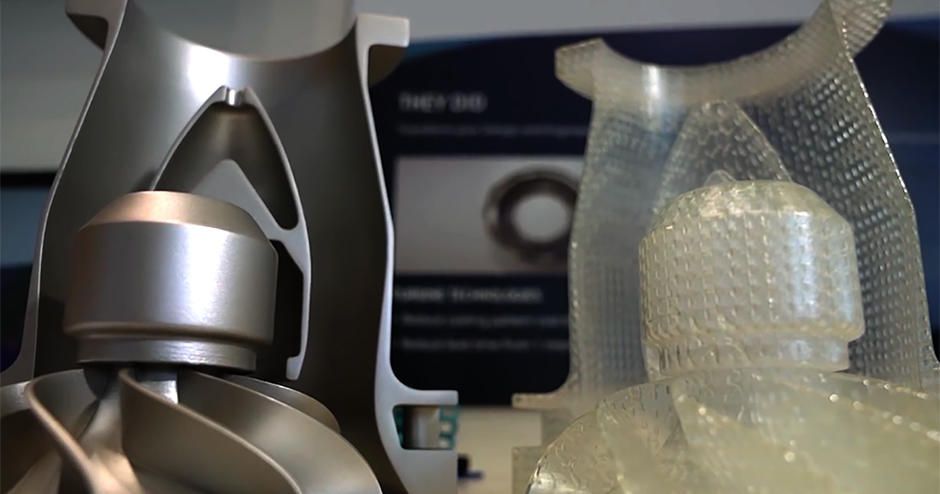
Selecting a manufacturing process is rarely a straight contest. The “winner” depends on what matters most for the component: dimensional accuracy, surface finish, alloy performance, production volume, lead time, certification needs, and total downstream work such as machining and inspection. In practice, traditional precision routes and newer additive methods often compete in early decision-making—and just as often complement each other later.
This comparison sets Investment Casting alongside industrial 3D printing (additive manufacturing) and explains where each method is strongest, using process characteristics described in Texmo Blank’s investment casting resources as a baseline for cast-part realities.
A quick definition of both processes
Investment casting (lost-wax casting)
Investment casting is a precision metal-casting method that begins with a wax pattern. The pattern is coated in ceramic to form a mould, the wax is melted out (dewaxed), and molten metal is poured into the ceramic cavity to create the final part. It is widely used for complex shapes, thin walls, undercuts, and fine details, often with strong repeatability and a high-quality surface finish.
Texmo Blank describes multiple investment-casting routes: atmospheric casting for smooth finishes and fine detail, vacuum casting for alloys where contamination control is critical, low-pressure aluminium casting for lightweight aluminium parts, and centrifugal casting for thin-walled or complex geometries.
3D printing (additive manufacturing)
Additive manufacturing is defined in ISO/ASTM standards as technologies that successively join material to create objects from 3D model data, typically layer by layer.
In metal 3D printing, this can mean processes such as powder bed fusion, directed energy deposition, or binder jetting, each with different strengths and limitations. In general, additive is valued for design freedom and fast iteration, but it often requires post-processing to achieve tight interfaces and consistent surface quality.
Head-to-head: where each process usually performs best
1) Geometry and design freedom
3D printing often leads when the design includes internal lattices, topology-optimised shapes, or enclosed channels that would be difficult to cast or machine. Layer-by-layer building can enable highly complex internal features without conventional tooling.
Investment casting leads when complexity is “castable complexity”: thin walls, undercuts, fine external detail, and intricate shapes that can be formed reliably in a ceramic shell mould. Texmo Blank specifically highlights investment casting’s strength in producing thin walls, undercuts, and fine details that are challenging for other casting methods.
Practical takeaway: If the part’s geometry is “freeform” and weight-optimised, additive may be the better starting point. If the part is complex but needs reliable replication at scale in a performance alloy, investment casting remains a strong contender.
2) Material properties and alloy choice
Investment casting is strong where alloy choice and performance are primary. Texmo Blank notes material versatility across stainless steels and other alloys, including titanium, cobalt, aluminium, and nickel-based alloys, and explains why vacuum processes may be preferred for reactive or high-performance metals.
3D printing can also produce high-performance metals, but qualification and consistency can be more demanding, especially when you need predictable properties across builds, machines, and sites. NIST highlights the need for measurement science and robust testing to qualify AM parts and processes—an indicator that variability and qualification burden are major considerations.
Practical takeaway: If your project is driven by proven alloy behaviour and established process controls, casting may reduce qualification risk. If your priority is lightweight design or rapid iteration and you can manage post-processing and qualification effort, additive can be viable.
3) Accuracy, tolerances, and surface finish
Investment casting typically produces near-net shapes with good surface finish, often reducing the amount of machining and assemblyrequired. Texmo Blank’s overview explicitly lists high precision, an excellent surface finish, and reduced machining time as benefits.
Additive manufacturing often requires additional finishing to achieve the same interface quality on critical surfaces. NIST publications and project descriptions repeatedly focus on AM part quality challenges such as dimensional tolerances, surface roughness, and defects, reinforcing that post-processing and process control are central to achieving consistency.
Practical takeaway: If the part has sealing faces, tight mating interfaces, or fatigue-sensitive surfaces, expect finishing in both processes—but typically more extensive and less predictable finishing effort with metal AM.
4) Production volume and cost behaviour
Investment casting usually wins for medium volumes because tooling and per-part costs often become favourable once you move beyond one-off production. Texmo Blank notes investment casting can be cost-effective for runs from prototypes up to thousands of parts, with reduced waste from near-net shaping.
3D printing typically wins for very low volumes and rapid change, where you value “tool-less” manufacture and design iteration more than unit cost. However, for many metal AM routes, build time, powder handling, heat treatment, and machining can raise the total cost per part.
Practical takeaway: For prototypes, spares, and low-volume complex parts, additive manufacturing can be efficient. For stable designs at repeatable volumes, investment casting often becomes more economical and scalable.
5) Lead time and prototyping speed
3D printing frequently wins on speed, particularly early in development. Texmo Blank’s prototyping page states that the fastest prototyping method uses 3D printing to produce accurate physical prototypes from client-provided digital designs.
Investment casting can still be fast, but it typically involves pattern work, ceramic shell build, melt-and-pour scheduling, and inspection. Once tooling and process parameters are established, it can become highly repeatable—but first-article lead time may be longer than printing a prototype.
Practical takeaway: If time-to-first-physical-part is the main constraint, additive often leads. If time-to-repeatable-production is the main constraint, casting can catch up quickly once the route is set.
Comparison table
| Decision factor | Investment casting | 3D printing (additive manufacturing) |
| Complex external geometry & fine detail | Strong, repeatable via ceramic shell moulding | Strong, especially for complex internal features |
| Surface finish / critical interfaces | Often good as-cast; machining as needed | Frequently requires post-processing for finishing and tolerances |
| Alloy flexibility and contamination control | Wide alloy support; vacuum options for reactive/high-performance metals | Alloy options exist, but qualification and consistency can be demanding |
| Best-fit volumes | Prototypes to thousands; often favourable for medium volumes | Often best for low volume, frequent design changes |
| Speed for early prototypes | Moderate (depends on patterns/tooling) | Often fastest for first iterations |
The “real” winner is often a hybrid workflow
In many engineering programmes, 3D printing does not replace investment casting—it accelerates it. A common path is:
- 3D-print prototypes to quickly validate form, fit, and design intent.
- Use findings to refine geometry, gating strategy, and manufacturability.
- Transition to investment casting for repeatable production in the required alloy and quality envelope, selecting the most suitable casting route (atmospheric, vacuum, low-pressure aluminium, centrifugal) based on material, complexity, volume, and finish requirements.
So, which process “wins”?
- 3D printing wins when the priority is rapid iteration, tool-less manufacturing, and extreme design freedom (especially for internal structures), and when you can manage post-processing and qualification requirements.
- Investment casting wins when you need repeatable precision, strong surface quality, complex but castable geometry, and robust alloy performance at production scale—often with a clearer path to consistent quality once the process is established.
If you want, I can also convert this into a short decision checklist (10–12 questions) that helps choose the process based on part geometry, alloy, tolerance bands, annual volume, and inspection/qualification needs—without drifting into a promotional tone.