
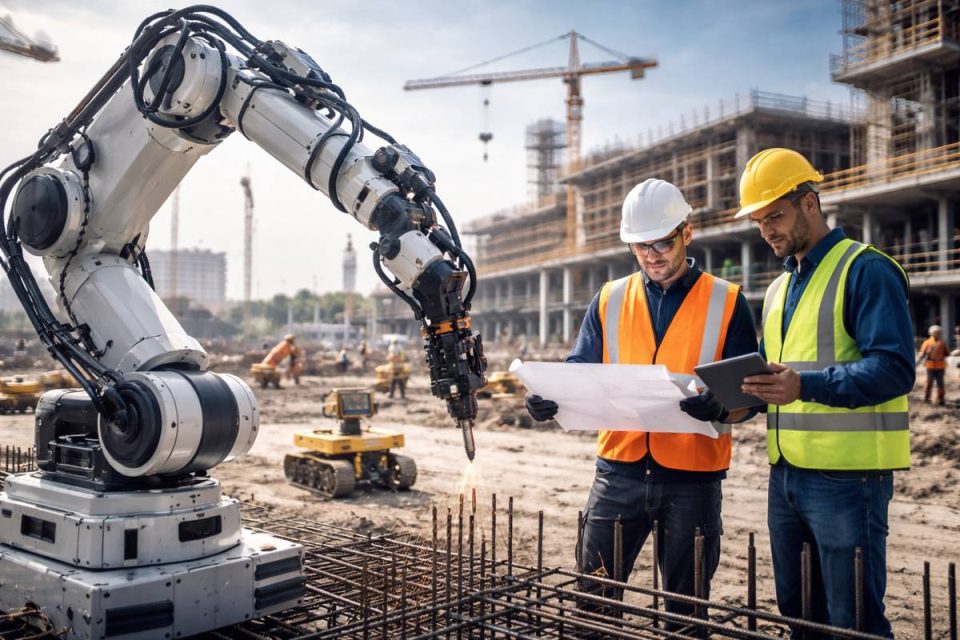
The landscape of modern business is undergoing a profound transformation, driven by the rapid advancement and integration of robotics. This technological shift is not merely an upgrade in machinery; it is fundamentally altering the fabric of the workforce and the very nature of work itself. Understanding this intersection is crucial for businesses aiming to navigate the complexities of the future. The conversation is no longer about whether robots will replace human workers, but rather how the two will collaborate to create more efficient, productive, and ultimately human-centric workplaces. This evolution requires careful planning, reskilling, and a proactive approach to organizational management.
The Technological Catalyst: Beyond Simple Automation
For decades, robotics in industry was largely confined to heavy, static machinery performing repetitive, dangerous, or high-precision tasks on assembly lines. This is classic automation. While still vital, contemporary robotics introduces advanced capabilities like artificial intelligence, machine learning, enhanced sensing, and mobility. These breakthroughs enable robots to operate outside of rigid, structured environments and interact safely with humans and their surroundings.
The new class of technological catalysts includes:
-
Collaborative Robots (Cobots): Smaller, lighter, and equipped with sophisticated sensors, cobots are designed to work alongside people. They can handle monotonous tasks, such as picking, packing, and machine tending, while their human partners focus on complex problem-solving or quality control, often in the same workspace without protective cages.
-
Autonomous Mobile Robots (AMRs): Unlike traditional automated guided vehicles (AGVs) that require fixed paths, AMRs navigate dynamic environments using onboard sensors and AI. They represent the robotics counterpart to automation, dynamically adapting to change and finding optimal routes in real-time, making them invaluable in logistics and warehousing for material handling.
-
AI-Integrated Robotics: When robotics is combined with advanced AI, systems move beyond executing pre-programmed scripts. They can learn from their environment, optimize their own performance, and even predict potential equipment failures.
These technologies are disrupting sectors far beyond manufacturing, including logistics, healthcare, agriculture, and hospitality.
Redefining Roles: The Reskilling Imperative
The most significant impact of robotics on the workforce is not widespread displacement, but role transformation. While specific high-repetition tasks may be fully automated, the demand for human skills will remain, albeit for different types of work. This shift necessitates a massive reskilling effort.
Jobs of the past centered on:
-
Manual dexterity and physical labor.
-
Repetitive cognitive tasks, like basic data entry.
-
Following rigid, pre-defined instructions.
Jobs of the future will prioritize:
-
Technological Fluency: Workers will need the ability to operate, maintain, and troubleshoot robotic systems. This includes basic programming, data analysis, and an understanding of human-machine interfaces.
-
Critical Thinking and Problem Solving: As robots handle predictable tasks, humans must be equipped to manage exceptions, diagnose complex system failures, and interpret the data generated by automated processes.
-
Creativity and Innovation: Robots excel at execution, but humans will continue to lead in designing new products, services, and operational strategies.
-
Emotional Intelligence and Interpersonal Skills: Roles requiring empathy, negotiation, mentoring, and leadership will be the hardest to automate and the most valuable in a hybrid workforce.
Educational institutions and corporate training programs must adapt to this reskilling imperative, moving away from teaching fixed knowledge toward fostering adaptability and life-long learning.
Operational Synchronicity: Optimizing the Hybrid Workforce
The goal of integrating robotics is operational synchronicity: creating a seamless workflow where humans and machines complement each other’s strengths. Achieving this hybrid workforce requires more than technological implementation; it necessitates a complete redesign of operational processes and corporate culture.
Key areas for optimization include:
-
Workflow Integration: Process mapping must identify tasks best suited for robots (repetitive, dull, dangerous) and those requiring human intervention (complex decision-making, exception handling). A cobot in an electronics assembly plant, for example, might place components while a human operator inspects the work and makes real-time adjustments.
-
Data-Driven Management: The sensors on robotic systems generate vast amounts of operational data. Organizations that can effectively collect, analyze, and act upon this information can optimize maintenance schedules, improve process efficiency, and make better workforce planning decisions.
-
Change Management and Culture: Successful integration depends on addressing employee concerns about job security and fostering a culture of collaboration. Transparent communication and involving employees in the design and implementation of robotic systems can lead to higher acceptance and engagement.
Operational synchronicity improves productivity and can create safer, more ergonomic work environments, reducing injuries and long-term strain on employees.
The Economic and Socio-Political Landscape
The interplay between robotics and the workforce does not occur in a vacuum; it is influenced by and influences the broader economic and socio-political landscape. This creates both microeconomic incentives and macroeconomic challenges.
From a microeconomic perspective, automation and robotics offer companies a way to lower variable costs, improve product quality, and increase output, which can be essential for remaining competitive. This is especially relevant in sectors facing labor shortages or upward wage pressure.
However, the macroeconomic implications raise complex questions:
-
Income Inequality: Skill polarization, where the demand for high-skill and low-skill jobs increases while middle-skill roles decline, can exacerbate income inequality. Public policy and corporate responsibility must address how the gains from automation are distributed.
-
Labor Market Dynamics: While technology may create new, higher-quality jobs, the transition can be challenging for those in displaced roles. Regional economies that rely heavily on low-skill manufacturing may be particularly vulnerable, requiring targeted development strategies.
-
Policy and Regulation: Governments play a vital role through investment in education and reskilling programs, social safety nets for displaced workers, and regulations that promote ethical use of AI and data privacy in robotic systems.
Frequently Asked Questions
Does automation through robotics always reduce a company’s total headcount?
No. While specific tasks may be automated, leading to a decrease in some roles, robotics often helps businesses grow, creating new positions in maintenance, programming, data analysis, and even expanded production. Many companies that integrate robotics end up with a net increase in headcount as their overall business operations expand and demand for new types of skilled labor grows.
What is the distinction between automation and robotics?
Automation is the broad term for technology that executes a pre-defined process with minimal human intervention; it can be physical (machinery) or software-based (like automating data entry). Robotics, while a form of automation, refers to physical machines that have some degree of autonomy and are capable of interacting with the physical world. For example, a specialized machine that automatically stamps metal parts is automation, but an Autonomous Mobile Robot (AMR) that navigates a dynamic warehouse floor is robotics.
How can a business effectively measure the return on investment (ROI) for a robotics project?
ROI for robotics is measured not just through direct labor savings, but also through increased throughput, improved quality (reduced error rates), enhanced safety (fewer worker injuries), and greater flexibility. When calculating ROI, it is essential to consider the entire product lifecycle and all associated costs, including training, maintenance, and potential productivity dips during implementation.
Are small and medium-sized enterprises (SMEs) able to leverage robotics, or is this technology only for large corporations?
Robotics is becoming increasingly accessible for SMEs. Cobots and “Robotics-as-a-Service” (RaaS) models, where companies lease rather than purchase robotic systems, have significantly lowered the initial capital expenditure. Modern programming interfaces are also simpler, reducing the need for highly specialized robotic engineers, allowing SMEs to automate specific tasks and remain competitive with larger firms.
What ethical considerations arise with increased workplace robotics?
Ethical considerations include fairness in recruitment for new tech-focused roles, data privacy regarding employee monitoring through sensors on robotic systems, and ensuring safe interactions between humans and autonomous or collaborative machines. Businesses must also consider the societal impact of their technology decisions and actively manage the reskilling of workers whose roles may change significantly.
What specific hard skills will be in highest demand for the future human workforce?
In addition to soft skills, employees will need high technological fluency. Highly valuable hard skills will include data analytics, software engineering, basic programming (especially for human-machine interfaces), diagnostic maintenance for complex electro-mechanical systems, and expertise in integrating and optimizing industrial internet-of-things (IIoT) platforms.